
Buying or upgrading a phone is easy. Knowing whether that smartphone technology actually delivers real value is much harder. Marketing slides promise faster chips, brighter screens, and all-day battery, but those claims rarely match the way a single person uses a device every day. The only honest way to settle the question is to measure outcomes you can feel and verify, not just numbers printed on a spec sheet.
This guide takes a practical, metrics-first approach to judging results from smartphone technology. You will learn how to define the outcome that matters to you, track meaningful performance and battery data, evaluate reliability, and connect raw capability to everyday experience. Where possible, the methods here lean on official frameworks such as Android performance guidance, Apple’s MetricKit, EU energy labeling, and recognized battery standards so your conclusions stay credible instead of anecdotal.
Define What Result You Are Trying to Measure
Before collecting a single data point, decide what “results” means for you. A device that wins for a mobile gamer may disappoint a photographer, and a phone that feels fast in a store can frustrate someone who keeps it for five years. Measurement without a goal produces noise.
Start by naming the outcome in plain language. Common goals include:
- Speed and responsiveness — apps that open quickly and scroll without stutter.
- Battery endurance — getting through a full day, or a heavy workload, without a top-up.
- Reliability — fewer crashes, freezes, and failed tasks.
- Productivity — finishing real work faster, such as editing photos or joining calls.
- Longevity and ownership cost — how the device holds up over years of updates and battery wear.
Write your goal down and rank the top two or three. This single step prevents the most common mistake in technology evaluation: optimizing for a metric that does not affect your daily life.
Set a baseline and a target
A result only has meaning relative to a starting point. Record how your current phone behaves first, then define a realistic target. For example, “screen-on time should improve from about five hours to seven,” or “the camera app should open in under a second.” Concrete baselines turn vague impressions into testable claims.
Track Performance With Meaningful Metrics
Performance is more than a benchmark score. According to the Android Open Source Project’s guidance on evaluating performance, meaningful measurement focuses on consistency and responsiveness — concepts like capacity and jitter — rather than peak numbers alone. A phone that is fast on average but stutters unpredictably often feels worse than a slightly slower device that stays steady.
Focus on metrics that map directly to how a phone feels in the hand:
- App launch time — how long it takes for an app to become usable, not just visible.
- Responsiveness — the delay between a tap and the on-screen reaction.
- Frame stability — consistent frame delivery while scrolling or gaming, measured by how often frames are dropped.
- CPU and memory pressure — whether the system runs out of headroom under load.
- Thermal behavior — how much performance drops as the device heats up over a sustained session.
Use the platform’s own measurement tools
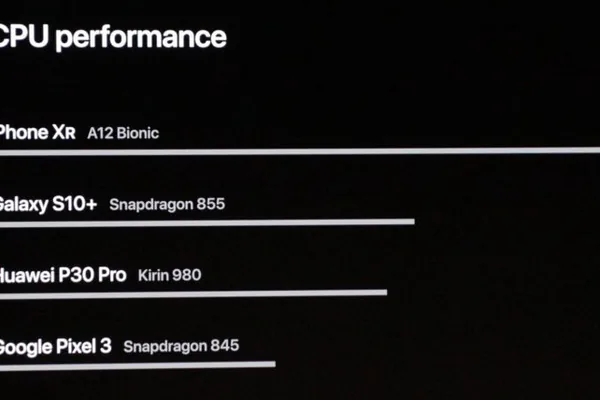
Both major platforms expose official ways to capture this data. On iOS, Apple’s MetricKit framework collects power, responsiveness, launch time, hang rate, CPU, memory, and disk metrics directly from real usage, which is far more representative than a one-off synthetic test. On Android, the Performance Class definition links a device to a documented set of capability requirements, giving you a standardized reference point when comparing hardware. Whenever you can, prefer these primary sources over screenshots from unverified third-party apps.
Test under repeatable conditions
Performance numbers are only comparable when the test conditions match. Run each device at the same screen brightness, refresh rate, network type, and battery level, and repeat the test several times to see whether results hold. A single run can be skewed by a background update or a momentary thermal spike.
Measure Battery Life and Power Efficiency
Battery results are where marketing and reality diverge most sharply. “All-day battery” depends entirely on what your day looks like. To measure power outcomes honestly, track a few complementary indicators rather than trusting a single figure.
- Screen-on time (SOT) — the most relatable metric, reflecting active use between charges.
- Standby drain — how much charge disappears overnight while the phone is idle.
- Charging behavior — how quickly the battery refills and how warm it gets while doing so.
- Battery health — the maximum capacity remaining compared with when the device was new.
For cross-device comparisons, regulated labels are increasingly useful. The European Commission’s energy label and ecodesign requirements for smartphones publish standardized data on battery endurance, energy efficiency, durability, and repairability. Because these figures follow a defined test method, they are more comparable between models than manufacturer claims. Battery test methodology itself is grounded in international standards such as IEC 61960-3, which specifies how performance and capacity of portable lithium cells are measured. Treat those lab numbers as a controlled reference, not a promise of what you will personally see.
Be cautious with lab figures
Standardized tests are valuable precisely because they are controlled — but that control is also their limit. Temperature, signal strength, app behavior, and personal settings all change real outcomes. Use official endurance ratings to rank devices fairly, then confirm with your own repeated screen-on-time measurements before drawing conclusions.
Evaluate Reliability, Crashes, and App Stability
A fast phone that crashes is not a good phone. Reliability is often the deciding factor in whether smartphone technology feels dependable over time, yet it is the metric people measure least. The data is available if you look for it.
Key reliability signals include:
- Crash rate — how often apps terminate unexpectedly.
- Hang rate — how frequently the interface freezes or becomes unresponsive.
- Failed sessions — tasks that do not complete, such as a payment or upload that errors out.
- Storage-related slowdowns — performance that degrades as storage fills.
- Update regressions — new problems that appear right after a software update.
Apple’s MetricKit reports hang and crash diagnostics, and Android’s developer tooling surfaces similar stability data. Even without developer tools, you can keep a simple log: note the date, the app, and what failed. Over a few weeks, patterns emerge that a single frustrating moment never reveals.
Watch the software, not just the hardware
Many reliability problems trace back to software updates rather than the chip or battery. A device that was stable can regress after an update, and a promised years-long update commitment only adds value if those updates do not introduce new instability. Always re-measure after a major OS update before deciding the hardware is at fault.
Connect Device Capability to User Experience
Raw capability matters only when it changes what you can actually do. The goal is to translate specifications into outcomes for your specific use cases.
- Display — judge brightness and color by whether the screen is readable outdoors and comfortable at night, not just by peak nits.
- Camera — evaluate real photos in the lighting you shoot in, rather than megapixel counts.
- Connectivity — measure usable speed and call stability where you live and work, not theoretical maximums.
- Storage speed — notice whether large apps install and open quickly under daily load.
- Durability and repairability — weigh published durability and repairability scores against how long you intend to keep the device.
- Accessibility — confirm the features you rely on work smoothly for your needs.

For each capability, ask: “What task does this improve, and can I feel the difference?” If you cannot connect a spec to a concrete outcome, it probably should not influence your decision.
Compare Lab Tests With Real-World Usage
Benchmarks, official performance classifications, and controlled battery tests are genuinely useful. They are repeatable, comparable, and hard to fake. But they describe behavior under fixed conditions, and your conditions are not fixed.
Balance the two sources of truth like this:
- Use lab and standardized data to shortlist devices and rule out weak performers fairly.
- Use repeatable field observations — your own measurements over days of normal use — to confirm the winner.
- Note where the two disagree. A device that benchmarks well but throttles hard under sustained load may underperform in real gaming or video sessions.
The aim is not to discard lab tests but to ground them. Official numbers tell you what a device can do; field measurement tells you what it does for you.
Build a Simple Smartphone Results Scorecard
Once you have collected data, a scorecard turns scattered observations into a clear decision. Keep it simple and weight each category by how much you ranked it earlier.
- Performance — launch time, responsiveness, frame stability.
- Battery — screen-on time, standby drain, charging behavior, battery health.
- Reliability — crash and hang rates, failed sessions.
- Usability — display, camera, connectivity, accessibility in your conditions.
- Durability and longevity — repairability, update commitment, build quality.
- Value — total cost of ownership over your expected keep time.
Score each category from one to five, multiply by your chosen weight, and total the results. The exact number matters less than the discipline: a scorecard forces you to compare devices on the outcomes you care about, under the same rules, instead of reacting to whichever spec is loudest.
Adjust weights to the person, not the product
A student, a commuter, and a content creator should not use the same weights. Re-running the same data through different priorities often produces different winners — which is exactly the point. The best phone is the one whose measured results align with your ranked goals.
Avoid Common Measurement Mistakes
Even careful evaluators fall into predictable traps. Watch for these:
- Relying on a single benchmark. One score, especially a peak one, hides throttling and real-world inconsistency.
- Comparing devices under different settings. Different brightness, refresh rate, or network conditions invalidate the comparison.
- Ignoring software updates. Results can shift after an update; always re-measure.
- Overlooking thermal throttling. Short tests miss the slowdown that appears during sustained load.
- Treating marketing specs as outcomes. A bigger number is not a better experience until it changes a task you actually perform.
- Testing once. A single run is an anecdote; repeated runs are evidence.
Avoiding these mistakes is often more valuable than adding new metrics. Clean, repeatable, goal-aligned measurement beats a large pile of inconsistent data every time.
Conclusion
Measuring results from smartphone technology comes down to a clear sequence: define the outcome you want, gather meaningful and repeatable data, and compare it honestly against both standardized references and your own real-world use. Performance, battery, reliability, usability, durability, and value each tell part of the story, and a simple weighted scorecard ties them together into a decision you can trust.
Lean on credible, official frameworks where you can — platform measurement tools, regulated energy labels, and recognized battery standards — but always confirm with how the device behaves in your hands over time. When you measure outcomes instead of marketing claims, you stop guessing whether a phone is “good” and start knowing whether it is good for you.
Official references
- Android Developers – Performance class – Defines Android performance classes and links device capability metrics to Android Compatibility Definition requirements.
- Android Open Source Project – Evaluate performance – Official Android guidance on evaluating device performance, including profiling and meaningful metrics such as capacity and jitter.
- Apple Developer Documentation – MetricKit – Official Apple framework for collecting iOS app power, responsiveness, launch, hang, crash, CPU, memory, and disk metrics.
- European Commission – Smartphones and tablets energy label and ecodesign – Primary EU source for smartphone energy efficiency, battery endurance, durability, repairability, and labelling requirements.
- IEC 61960-3:2017 – International standard specifying performance tests and criteria for secondary lithium cells and batteries used in portable devices.
