
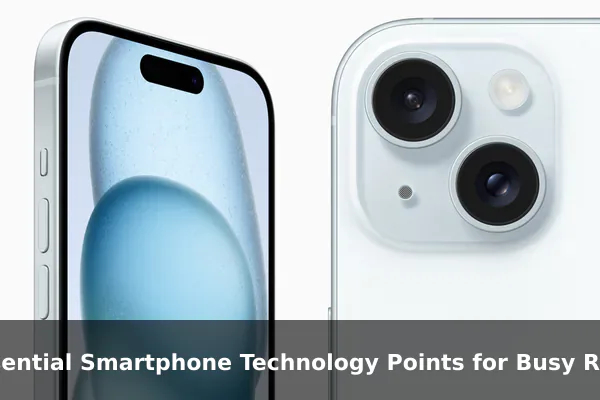
Smartphone technology evolves at a pace that can overwhelm even attentive buyers, but the truth is that most everyday decisions come down to a handful of durable ideas. If you only have a few minutes to understand what truly affects your daily experience, focusing on a short list of core systems will serve you better than chasing every new spec sheet.
This guide is written for busy readers who want plain explanations of performance, connectivity, battery life, cameras, security, and safety. It separates concepts that stay relevant year after year from marketing claims that shift with each launch, and it points to official references when claims involve standards or health.
Where prices, availability, or rules are mentioned, treat the numbers as general context rather than fixed promises. Specifications and regulations change, and the best source for current details is always the manufacturer or the relevant standards body.
What Matters Most in a Modern Smartphone
Before comparing brands, it helps to rank your priorities. A phone is a system of trade-offs: a thinner body often means a smaller battery, a brighter display can affect heat, and a longer software-support window may add to the upfront price. Knowing what you value most narrows the field quickly.
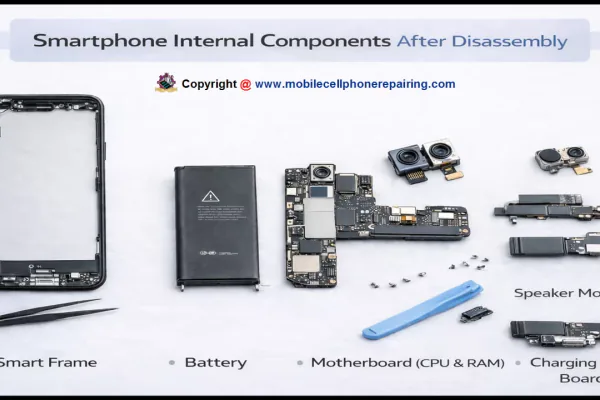
Core Priorities Worth Weighing
- Reliability: consistent performance across calls, navigation, payments, and messaging.
- Battery life: enough capacity to comfortably reach the end of a working day.
- Display quality: readability outdoors and comfort during long sessions.
- Camera usefulness: dependable results in normal light, not just lab benchmarks.
- Software support: security patches and feature updates over several years.
- Repair and replacement costs: parts availability, screen and battery service pricing.
Treat this short list as your filter. If a feature does not improve one of these areas in a way you can actually feel, it is probably a distraction.
Performance: Chipset, Memory, and Everyday Speed
The chipset, often called the system-on-chip, drives nearly every visible behavior on your phone. Modern processors from major vendors handle browsing, video calls, and standard apps with ease, so the differences most users notice come from sustained performance, thermal behavior, and software tuning rather than peak benchmark scores.
Memory and Storage in Plain Terms
RAM determines how many apps can stay ready in the background, while storage type and capacity affect app launch times and how quickly photos and videos save. Faster storage classes generally feel snappier when opening large apps or recording high-resolution video, although the gains are easy to overstate.
Why Thermals and Software Matter
Phones reduce clock speed to protect themselves from heat, which is why a thinner device under heavy load may slow before a thicker one. Long-term smoothness also depends on background services, animation behavior, and how aggressively the operating system manages memory. A well-tuned mid-range phone can outperform a poorly tuned premium one in real use.
Connectivity: 5G, LTE, Wi-Fi, Bluetooth, and NFC
Connectivity is where marketing language and engineering reality drift the furthest apart. Cellular standards such as LTE and 5G NR are defined by the 3GPP, and the broader 5G framework is described by the ITU through its IMT-2020 work. Real-world speeds depend on bands, network deployment, signal strength, and congestion, so a phone listing many 5G bands does not guarantee a fast experience everywhere.
Wi-Fi and Bluetooth Without the Hype
Newer Wi-Fi generations can improve speed and behavior on crowded networks, but the benefits only appear if your router and internet plan support them. Bluetooth versions and profiles are governed by the Bluetooth SIG, and pairing experience often depends as much on the accessory as on the phone. Codec support matters for wireless audio quality, while range and stability usually come down to antenna design and interference.
NFC, UWB, and Other Short-Range Links
NFC enables tap-to-pay and quick pairing, ultra-wideband supports precise location features on supported devices, and modern phones often include several short-range radios that operate quietly in the background. Most users do not need to compare these in detail, but knowing they exist helps when a phone advertises a specific feature like contactless payment or digital car keys.
Battery Life and Charging Without the Hype
Battery capacity, measured in milliamp-hours, is only one part of the story. Efficiency from the chipset, display, and software often matters more, which is why two phones with similar capacities can deliver very different endurance. Heavy users who stream, navigate, or game for long stretches will see shorter runtimes than light users on the same device.
Charging Speeds and Heat
Higher wattage figures are eye-catching, but charging speed varies across the curve and slows as the battery fills. Fast charging also generates heat, which can affect long-term battery health. Wireless charging is convenient but generally less efficient than wired charging, and using cases or accessories rated for your device helps avoid surprises.
Realistic Habits for Longer Battery Life
- Avoid letting the battery sit at very high or very low charge for long periods.
- Use moderate screen brightness and adaptive refresh when possible.
- Keep the phone out of hot environments while charging or under load.
- Update software so battery optimization improvements reach your device.
Cameras: Specs That Help and Specs That Distract
Camera quality is shaped by sensor size, lens design, stabilization, and the software that processes each shot. Megapixel counts are easy to compare, but a higher number does not automatically mean a better picture, especially in low light. Computational photography blends multiple frames to improve exposure and detail, and the tuning behind it varies significantly between brands.
What Actually Affects Daily Photos
- Main sensor performance: the workhorse for most shots.
- Stabilization: reduces blur for handheld photos and video.
- Night mode quality: meaningful when you frequently shoot indoors or after dark.
- Video features: resolution, frame rate, and dynamic range options.
- Consistency across lenses: matching colors between wide, ultra-wide, and telephoto.
For most readers, sample images from independent reviewers are more useful than reading specifications alone.
Display, Audio, and Build Quality
Displays influence comfort more than any single component. Brightness affects outdoor readability, refresh rate affects perceived smoothness, and panel type affects contrast and viewing angles. OLED panels typically offer deeper blacks and richer contrast, while LCDs can be a sensible choice on budget-focused devices.
Audio, Microphones, and Durability
Stereo speakers improve calls and media, while microphone quality matters for voice notes and video. Water and dust resistance ratings communicate tested conditions rather than guarantees, and protective glass reduces but does not eliminate the risk of cracks. A comfortable shape, balanced weight, and accessible buttons influence daily satisfaction more than headline specs.
Security, Privacy, and Software Updates
Security depends on layered habits: a strong passcode, reliable biometrics, careful app permissions, and timely updates. Modern phones encrypt user data by default, but the protection only holds if you keep the operating system patched and avoid sideloading untrusted apps.
Why Update Length Matters
Longer support windows extend a phone’s safe usable life and protect its resale value. When comparing devices, check how many years of operating system upgrades and how many years of security patches the manufacturer promises. A phone that receives several years of patches is often a better long-term value than a cheaper model with a shorter window.
Privacy Habits Worth Building
- Review app permissions periodically, especially location and microphone access.
- Use passkeys or strong passwords with a reputable manager.
- Enable device-find features and remote lock options before you need them.
- Be cautious with public networks and consider trusted DNS or VPN options when appropriate.
Health, Radiofrequency Safety, and Sensible Use
Smartphones transmit using radiofrequency energy, and concerns about exposure are best addressed with reputable sources. The U.S. Federal Communications Commission publishes general guidance on radiofrequency safety, and the U.S. Food and Drug Administration maintains a public overview of the current scientific evidence about cell phone radiofrequency radiation. Both agencies emphasize that certified devices used as directed fall within established safety guidelines.
Practical Habits for Everyday Comfort
- Use devices certified for sale in your region, since they undergo compliance testing.
- Follow manufacturer guidance about case use, charging accessories, and storage temperatures.
- Take breaks during long sessions to reduce eye strain and posture fatigue.
- Keep firmware up to date so radio and power management improvements are applied.
Avoid sources that promise dramatic health benefits or risks without evidence; cautious, mainstream guidance remains the most reliable framing.
A Quick Buying Checklist for Busy Readers
When time is short, run through a brief checklist instead of comparing every spec. The goal is to match the phone to how you actually live, not to chase the highest number in every category.
- Define your main use: work, travel, photography, gaming, or general daily tasks.
- Confirm carrier compatibility: check supported bands for your network and region.
- Check software support length: longer is better for security and resale.
- Read independent reviews: look for sustained performance and camera samples.
- Estimate total cost: include accessories, repair pricing, and likely upgrades.
- Verify warranty and service options: availability in your area matters more than headline coverage.
Bringing It All Together
Smartphone technology rewards readers who focus on a few durable ideas rather than every new headline. Performance, connectivity, battery life, cameras, displays, security, and sensible safety habits cover almost every meaningful decision you will face. Anchor specific claims about standards or health to authoritative sources, treat marketing numbers as starting points rather than conclusions, and let your actual daily use guide the trade-offs.
A thoughtful approach is more valuable than an exhaustive one. By understanding what each system contributes and where claims should be checked, busy readers can make confident choices without spending hours on every comparison, and they can keep that clarity even as the next generation of devices arrives.
Official references
- 3GPP Specifications & Technologies – Primary standards source for cellular technologies used by smartphones, including LTE and 5G NR.
- ITU-R IMT-2020 (5G) – International framework for 5G requirements and terminology, useful for checking claims about what 5G means.
- Federal Communications Commission Radio Frequency Safety – US regulator reference for radiofrequency exposure, SAR, spectrum, and wireless-device compliance context.
- FDA Radio Frequency Radiation and Cell Phones – Official health-agency reference for cell phone RF radiation and safety evidence.
- Bluetooth SIG Specifications – Primary source for Bluetooth versions, profiles, and adopted specifications used by phones and accessories.
