
Introduction: IP68 Is Useful, but It Is Not a Waterproof Promise
IP68 is one of the most common durability claims on modern smartphones, yet it is also one of the most misunderstood. Many buyers see the rating and assume the phone is waterproof enough for swimming, shower use, beach photography, or repeated rinsing under a tap. The reality is more specific. IP68 is a standardized rating that describes a device’s tested resistance to dust and fresh water under defined laboratory conditions. It is not a lifetime guarantee, a permission slip for underwater use, or proof that every kind of liquid exposure is safe.
The goal of this guide is to explain what IP68 actually covers in practical smartphone terms. Instead of treating the rating as a marketing badge, we will break down the meaning of each digit, the difference between lab tests and real-world accidents, why two IP68 phones may not be equally water resistant, and what you should do after your phone gets wet. This is especially important because water resistance changes as a phone ages. Adhesives soften, seals wear, frames flex, and past drops can create tiny gaps that are invisible from the outside.
Understanding IP68 helps you make better decisions. It can tell you when a phone is likely to survive a splash, a spill, dust in a backpack, or a short accidental drop into fresh water. It can also help you avoid expensive mistakes, because many manufacturers still exclude liquid damage from warranty coverage even when the phone has an IP68 rating.
What IP68 Means on a Smartphone
The letters IP stand for Ingress Protection. In simple terms, the rating describes how well a device enclosure resists the entry of solid particles and liquids. The standard is used across many product categories, not only phones. You may see IP ratings on earbuds, smartwatches, outdoor lights, industrial equipment, security cameras, and rugged electronics.
For smartphones, IP68 is usually presented as a premium durability feature. The rating contains two digits. The first digit describes protection against solids such as dust. The second digit describes protection against water. In IP68, the first digit is 6 and the second digit is 8.
The 6 in IP68: Dust-Tight Protection
The first digit, 6, is the highest commonly used solid-particle rating. It means the device is considered dust-tight under the test conditions. For phone users, this matters because fine particles can work their way into speaker grilles, USB-C ports, button gaps, microphone openings, and camera-ring edges.
A dust-tight rating does not mean the phone is impossible to dirty or clog. Dust, lint, sand, and pocket debris can still collect on the outside of ports and grilles. The rating means dust should not enter the phone’s internal enclosure in a way that interferes with safe operation during the defined test. That distinction matters when you are dealing with beach sand, construction dust, hiking trails, or dusty car mounts.
The 8 in IP68: Continuous Immersion Under Specified Conditions
The second digit, 8, means the device has been tested for continuous immersion in water beyond the baseline level associated with IP67. However, the exact depth and duration are not universal. The standard allows manufacturers to specify the conditions, as long as they are more demanding than the lower immersion category.
This is why one IP68 phone might be advertised for immersion in up to 1.5 meters of fresh water for 30 minutes, while another may claim up to 6 meters for 30 minutes. Both can be IP68, but their manufacturer-stated limits are different. The rating alone does not tell the whole story. You need the phone maker’s specific depth, time, and liquid conditions to understand what was tested.
What IP68 Actually Covers
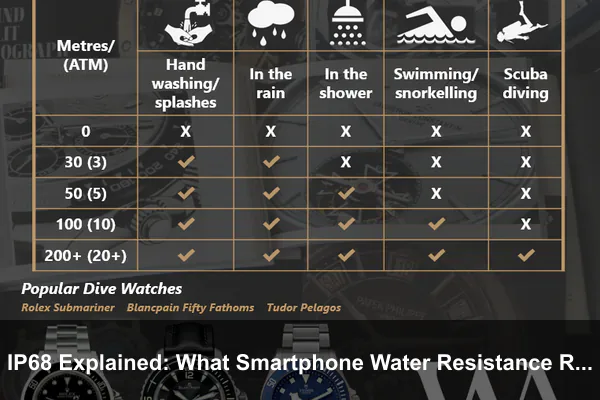
IP68 coverage is best understood as resistance to accidental exposure, not permission for intentional water use. In typical smartphone marketing, the rating supports confidence against everyday mishaps: rain, splashes, dust, spills, and short accidental immersion in clean water. It does not make the phone a dive camera or a water-sport device.
Everyday Splash and Rain Exposure
An IP68 phone is usually well equipped for common splash scenarios. Using your phone during light rain, getting a few drops on it while washing your hands, or having it near a kitchen sink is generally within the spirit of the rating. The phone’s seals, gaskets, adhesives, and internal barriers are designed to reduce the chance that water reaches sensitive components during these brief events.
That said, rain and splashes vary. A light drizzle is not the same as a pressure washer, a high-speed bike ride in heavy rain, or water hitting the phone at force through a showerhead. IP68 is about immersion resistance under defined conditions, not resistance to every water impact angle or pressure level.
Accidental Drops Into Fresh Water
The most relevant IP68 scenario is a short accidental drop into fresh water. Examples include a phone falling into a sink, bathtub, puddle, toilet bowl, or shallow pool edge. If the device is retrieved quickly, powered normally, and dried properly, IP68 improves the chance of survival compared with an unrated phone.
The important phrase is fresh water. Most IP68 smartphone tests are based on clean, still water. Real-world liquids often contain minerals, soap, salt, chlorine, sugar, alcohol, oils, or other contaminants. Those substances can leave residue, corrode contacts, damage coatings, or weaken seals.
Dust, Pocket Lint, and Fine Particles
The dust side of IP68 is often overlooked because water resistance gets more attention. However, the dust-tight rating is valuable. Phones are carried in pockets, bags, cars, workshops, beaches, and outdoor environments. Fine dust can be abrasive, and repeated exposure can affect moving parts such as buttons or SIM trays.
IP68 does not eliminate the need to clean the phone gently. It does mean the internal enclosure has been tested against dust ingress. For most people, this is useful protection against daily grime rather than a license to expose the phone to sandstorms, metal shavings, or heavy job-site dust without additional care.
What IP68 Does Not Cover
The most expensive misunderstandings happen when users treat IP68 as waterproofing. The rating has limits, and many of those limits matter in ordinary life. Water resistance is a controlled test result, not an all-purpose protection shield.
Salt Water, Chlorinated Water, and Soapy Water
Salt water is especially harsh. It can accelerate corrosion, leave conductive residue, and damage metal contacts. Chlorinated pool water can also be aggressive, especially with repeated exposure. Soapy water is another problem because surfactants can reduce surface tension and help liquid move through small gaps more easily than clean water.
This is why using an IP68 phone in the ocean, pool, hot tub, bath, or shower is riskier than many people expect. Even if the phone survives the first exposure, repeated contact can slowly degrade seals or leave residue in ports and speakers.
High-Pressure Water and Moving Water
Water pressure changes the situation. A phone sitting still in a tank of clean water is not the same as a phone hit by a jet of water. Showers, faucets, hoses, waterfalls, water slides, and waves can drive water into openings more forcefully than static immersion tests.
Even a shallow environment can be risky if the water is moving fast. Jumping into a pool with a phone in your pocket can expose it to sudden pressure. Dropping it into water from a height can create impact force. IP68 does not automatically cover these dynamic conditions.
Heat, Steam, and Hot Tubs
Steam is not the same as liquid water. Bathrooms, saunas, and hot tubs create warm, humid conditions that can stress adhesives and seals. Temperature changes can also cause materials to expand and contract, which may create tiny paths for moisture. Hot water can be more damaging than room-temperature fresh water because it can soften seal materials more quickly.
This is why taking a phone into a shower or sauna is a bad habit even if the device is IP68 rated. The phone may appear fine for a while, but moisture-related damage can show up later as speaker distortion, charging errors, camera fogging, screen issues, or internal corrosion.
Physical Damage Before Water Exposure
IP68 assumes the device enclosure is intact. Drops, bends, cracked glass, dented frames, repaired screens, loose back covers, or damaged camera rings can all reduce water resistance. A phone with a tiny frame gap may still look normal, but its original sealing performance may be compromised.
Repairs are another major factor. If a screen, back glass, battery, charging port, or camera module has been replaced, water resistance depends on the quality of the parts, adhesive, pressure fitting, and testing after repair. A repaired phone may no longer match its factory rating unless the repair process restored and verified the seals properly.
Why Two IP68 Phones Can Have Different Limits
One of the confusing parts of IP68 is that the rating is not a single fixed depth and time for every phone. Manufacturers can test beyond the minimum immersion category and publish their own conditions. This means IP68 should always be read with the device’s specific fine print.
Manufacturer Stated Depth and Duration Matter
When comparing phones, look for language such as up to 1.5 meters for 30 minutes or up to 6 meters for 30 minutes. Those numbers are part of the practical meaning of the rating. A phone with a deeper tested limit may have stronger sealing, a different internal design, or more conservative engineering around pressure tolerance.
However, the stated limit is still not a real-world guarantee. It usually applies to controlled fresh water, a new device, and specific test conditions. It does not account for previous drops, aging adhesive, hot water, moving water, or chemicals.
Design Choices Affect Real-World Resistance
Smartphones are full of openings. They need speakers, microphones, charging ports, SIM trays, buttons, camera assemblies, and sometimes pressure vents. Engineers use seals, meshes, membranes, adhesives, and internal barriers to manage these openings. The quality and layout of those protections can vary by brand and model.
A phone with fewer seams may have an easier path to strong resistance. A phone with complex moving parts, unusual camera hardware, or a thinner frame may require more careful sealing. This does not mean one design is automatically better, but it explains why IP68 is only a starting point.
Age Changes the Rating in Practice
Water resistance is strongest when the phone is new and undamaged. Over time, heat, cold, charging cycles, pocket pressure, drops, and normal wear can affect seals. Adhesives can dry, soften, or shift. Rubber gaskets can compress. A phone that passed IP68 testing at the factory may not perform the same way after two or three years of daily use.
This is why cautious owners treat IP68 as backup protection. The rating is there for accidents, but intentional water exposure becomes less sensible as the device ages.
How IP68 Testing Differs From Real Life
Laboratory testing is controlled by design. Real life is not. A lab can use clean water, stable temperatures, known depth, known duration, and a new device. Daily use introduces variables that are much harder to predict.
Lab Water Is Cleaner Than Most Real Water
Clean test water does not represent coffee, soda, seawater, pool water, shampoo, hand soap, mud, or rain mixed with pollution. Many liquids become dangerous not only because they are wet, but because they leave behind residue. Sugar can become sticky, salt can conduct electricity and corrode metal, and soap can help liquid spread into places it should not go.
If your phone is exposed to anything other than fresh water, the risk profile changes. Even if the device still works immediately, residue can cause delayed problems around charging contacts, speakers, microphones, and internal connectors.
Still Water Is Not Moving Water
Static immersion testing does not fully represent waves, showers, hoses, rapids, or faucets. Moving water can apply pressure at angles that are difficult to replicate with a simple depth rating. A phone held under a running tap may experience force at the USB-C port, speaker grille, or microphone holes that differs from immersion in a tank.
This is why rinsing a phone under a faucet should be approached carefully. If cleaning is necessary, a lightly damp lint-free cloth is usually safer than direct water flow. For sand or salt exposure, follow the manufacturer’s cleaning guidance for your specific model.
Real Phones Are Dropped, Twisted, Heated, and Repaired
A factory test does not know your phone’s history. It does not know whether the phone has been dropped on concrete, sat on, used in a hot car, opened for repair, or carried without a case for years. These details matter because water resistance depends on physical integrity.
If the screen is cracked or the back glass is lifting, assume the phone is no longer meaningfully water resistant. The same caution applies if the SIM tray gasket is missing, the frame is bent, or a repair shop did not pressure-test the device after service.
Common Myths About IP68 Water Resistance
Misleading assumptions about IP68 are everywhere. Clearing them up can prevent unnecessary damage and help you use the rating correctly.
Myth 1: IP68 Means Waterproof
IP68 means water resistant under specified test conditions. Waterproof suggests total protection, which is not what smartphone makers are claiming. No everyday smartphone should be treated as permanently immune to water.
Myth 2: Warranty Covers Water Damage
Many buyers assume that an IP68 rating means liquid damage is covered under warranty. In many cases, it is not. Manufacturers often include liquid contact indicators inside phones, and if those indicators show exposure, warranty service may be denied or limited. The rating helps describe design resistance, but it does not automatically change warranty terms.
Myth 3: If It Survived Once, It Is Always Safe
A phone can survive one dunk and fail after another. Each exposure can stress seals, leave residue, or create corrosion. Water damage can also be delayed. A device may work for hours or days before charging issues, display problems, camera fogging, or audio distortion appears.
Myth 4: Rice Fixes a Wet Phone
Rice is not a reliable repair method. It does not remove minerals, salt, soap, or corrosion from inside a device. It can also introduce dust or starch into ports. A better approach is to power down if needed, remove accessories, wipe the phone, let it dry with airflow, and avoid charging until the port is completely dry.
What To Do If Your IP68 Phone Gets Wet
If your phone has been exposed to water, the right response depends on the type of liquid and the severity of exposure. The goal is to reduce electrical risk, remove surface moisture, and avoid pushing liquid deeper into openings.
After Fresh Water Exposure
For a brief splash or accidental dunk in clean fresh water, follow a calm drying process. Do not shake the phone aggressively, do not insert objects into ports, and do not use high heat.
-
Remove the phone from water immediately.
-
Take off the case, cables, and accessories.
-
Wipe the exterior with a clean, soft, lint-free cloth.
-
Hold the phone with the charging port facing downward and tap gently to help water leave openings.
-
Let it dry in a ventilated area before charging.
-
Wait longer if the phone shows a moisture warning or if audio sounds muffled.
Speaker distortion after water exposure is common and may improve as water evaporates from the grille. Charging should wait until the port is dry because electricity and moisture at the connector can cause corrosion or shorting.
After Salt Water, Pool Water, or Dirty Liquid
Salt, chlorine, mud, soda, alcohol, and soap are more serious. The best action depends on your manufacturer’s instructions, but you should treat the exposure as higher risk than fresh water. Wipe the phone thoroughly, avoid charging, and consider professional inspection if the liquid was heavy, prolonged, or contaminated.
If the device was submerged in seawater or a sugary drink, there may be residue that simple drying cannot solve. Corrosion can begin quickly, especially around ports and internal connectors. A repair technician may need to inspect and clean the device before damage spreads.
When To Seek Service
Get professional help if you notice any of the following after liquid exposure:
-
The phone will not charge after the port has had time to dry.
-
The display flickers, dims, shows lines, or becomes unresponsive.
-
The camera lens fogs from the inside.
-
The speaker or microphone remains distorted after drying.
-
The phone gets unusually hot.
-
Buttons feel sticky, loose, or inconsistent.
-
The device shuts down or restarts unexpectedly.
These symptoms can indicate moisture or residue inside the device. Waiting may make the repair more expensive.
How To Protect an IP68 Smartphone in Daily Use
The smartest way to think about IP68 is as a safety net. You should be glad it is there, but you should not rely on it as your primary protection plan. A few habits can preserve water resistance and reduce the chance of damage.
Avoid Unnecessary Water Exposure
Do not use IP68 as a reason to take underwater photos, scroll in the shower, or place the phone on a wet sink edge. The less often the seals are challenged, the better. If you need underwater use, choose a properly rated waterproof case designed for that purpose.
Inspect Cases, Ports, and Trays
Cases can trap moisture, sand, or salt against the phone. Remove the case after water exposure and dry both the phone and case separately. Also check the SIM tray gasket if your phone has a physical tray. A missing or damaged gasket can reduce protection.
Keep the charging port clean, but do not dig into it with metal tools. If lint or debris blocks charging, use manufacturer-safe cleaning methods or professional service. Damaging the port can create both electrical and sealing problems.
Be Careful After Repairs
After any repair that opens the phone, ask whether water-resistant seals were replaced and whether the device was pressure-tested. A screen replacement or battery replacement can restore everyday function without fully restoring factory sealing. This is especially important if you plan to keep the phone for years.
Use a Waterproof Case for High-Risk Activities
For beaches, boats, pools, kayaking, fishing, water parks, heavy rain hikes, or travel in humid climates, a dedicated waterproof pouch or case is more appropriate than relying on IP68 alone. Choose a case that is independently rated and test it without the phone before trusting it.
How To Read IP68 Claims Before Buying a Phone
When shopping for a smartphone, do not stop at the IP68 badge. Read the small print and compare the stated conditions. This can reveal meaningful differences between models.
Check the Exact Depth and Time
Look for the manufacturer’s published immersion limit. A complete claim should mention both depth and duration. If a product page says IP68 but does not clearly explain the test conditions, check the official specifications or support documentation.
Look for Liquid Damage Warranty Language
Before assuming you are protected, read the warranty terms. If liquid damage is excluded, then the rating is best understood as risk reduction, not financial protection. This distinction is important for expensive flagship phones, where water-related repairs can cost a significant amount.
Consider Your Use Case
If your phone mostly lives in an office, car, and home, IP68 offers reassuring protection against accidents. If you work outdoors, spend time near salt water, repair equipment, travel in monsoon conditions, or use your phone around pools, you may need additional protection beyond the rating.
Also consider how long you keep phones. If you upgrade every year, factory water resistance may remain close to its original condition. If you keep phones for four or five years, aging seals become a bigger concern.
Practical Examples: What Is Usually Fine and What Is Risky
To make IP68 easier to apply, here are realistic smartphone scenarios and how to think about them.
Usually Low Risk
-
A few raindrops while checking maps.
-
A brief splash from a sink.
-
Dust in a backpack or pocket.
-
A quick accidental drop into clean shallow water, followed by proper drying.
-
Using the phone with slightly wet hands.
Moderate to High Risk
-
Taking the phone into the shower.
-
Recording video in a swimming pool.
-
Using the phone at the beach with wet, sandy hands.
-
Rinsing the phone under a strong faucet.
-
Keeping the phone in a sweaty armband for long workouts.
High Risk
-
Submerging the phone in seawater.
-
Using it in a hot tub or sauna.
-
Exposing a cracked or repaired phone to water.
-
Charging while the USB-C port is wet.
-
Using pressure washers, hoses, or strong jets near the phone.
Conclusion: Treat IP68 as Accident Protection, Not an Invitation
IP68 is a valuable smartphone feature, but its meaning is narrower than many people assume. It tells you that a phone has strong dust protection and has been tested for water immersion under manufacturer-specified conditions. It does not guarantee survival in salt water, pool water, soapy water, steam, high-pressure water, or repeated exposure over years of use.
The practical takeaway is simple: IP68 improves your odds when accidents happen. It can help your phone survive rain, splashes, dust, and brief fresh-water immersion. But the rating is not permanent, not universal across all phones, and often not backed by liquid damage warranty coverage. For daily use, keep the phone dry when you can, dry it properly when it gets wet, avoid charging wet ports, and use a dedicated waterproof case for activities where water exposure is likely.
When you understand what IP68 actually covers, you can stop treating it as a vague marketing term and start using it as a practical durability guide. That is the difference between relying on a rating blindly and using smartphone technology with realistic confidence.
